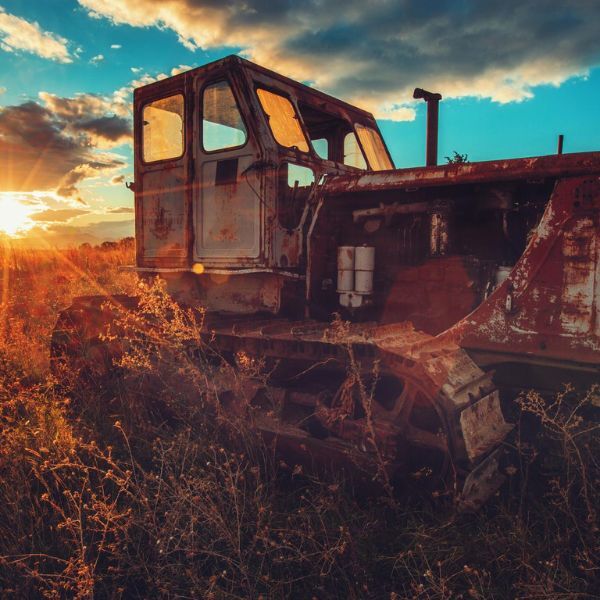
For people in rural communities, tractors are a symbol of a lifestyle that’s close to the heart. Whether living on a farm or residing in a small town, people in agricultural areas hold a special affinity for tractors. Many people have pleasant memories of tractors from childhood. With the sentimental attachment many people feel toward tractors, it’s no wonder that the passion for restoring old tractors is popular.
What do people do with old tractors they restore? These tractors end up doing everything from becoming collectibles in parades and festivals to heading back out to work the fields on farms. Classic tractors restored to mint condition are popular attractions at events, and older model tractors can still do the work they were designed to do originally. Many do-it-yourselfers appreciate the fact that they can still work on older model tractors themselves, which is not the case for many modern tractors with computerized systems.
Here’s the good news for anyone wanting to restore an older tractor. Many essential replacement parts are still available for models that rolled off the assembly line decades ago. Here’s a quick rundown of parts that are available for older model tractors.
Finding replacement parts for older model tractors
Alternators: Power to run the electrical system and accessories is generated through the alternator. When the alternator loses its ability to generate voltage, the battery becomes insufficiently charged and the electrical system fails.
Starters: The starter is powered by an electrical current and engages the engine to start the tractor. Being slow to engage or slow to disengage is a sign of a starter going bad. While there are many reasons a tractor may not start, inspecting the condition of the starter is a reasonable place to check.
Solenoids: These electromagnetic switches activate the starter. If the solenoid is going bad. The engine will turn over slowly even when you know the battery is fully charged. In the case of a dying solenoid, there won’t be any clicking sounds like with other components.
Voltage Regulators: These components manage electrical current so that the system receives enough voltage to operate but not too much to cause damage.
Find tractor voltage regulators here
Water Pump: The water pump is an essential part of the tractor’s cooling system. It circulates coolant to capture engine heat and bring it to the radiator for release. Over time, water pumps can develop corrosion and leaks that compromise their performance.
Radiator: The radiator is another important part of the tractor’s cooling system. It is designed to release excess heat in order to maintain an optimal engine temperature. Corrosion and leaks will eventually require replacement of the radiator.
Fuel System Components: Fuel pumps, carburetors and fuel injectors are all important parts of a tractor’s fuel system. Keeping these parts in good condition helps deliver fuel to power the engine in a smooth manner.
Find fuel system components here
Clutches: The controlled and smooth movement of your tractor is dependent on clutches. If the driving of your tractor seems choppy and uncontrollable, the clutches should be inspected.
Lights: Older tractors often use incandescent or halogen lights, but today many tractor owners are upgrading to brighter and more energy efficient LED lights. These brighter lights make a significant difference when working at night.
Sourcing parts for restoring older tractors
The good news is that parts for restoring many models of older tractors are readily available. DB Electrical carries many of these parts, but there are even sources like Complete Tractor dedicated to enthusiasts of older tractors. If you have the passion to restore an older tractor, you certainly can find the parts.